 Manoj Dadlani
No-Code Bioinformatics: Run Your Own Omics Analysis
Which omics analyses a bench scientist can run without code, a five-point pre-flight checklist, and when to bring in a bioinformatician.
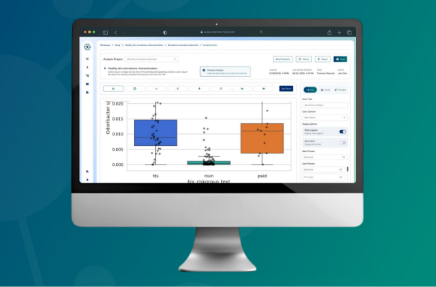
A multi-omics data analysis platform is software that stores, harmonizes, analyzes and shares data from two or more omics layers, such as metagenomics, transcriptomics, proteomics and metabolomics, in one governed environment.
For an R&D organization, the multi-omics platform you choose decides whether each study becomes a reusable asset or another folder of one-off scripts that nobody can rerun. The second outcome has a measurable cost. In a Nature survey of 1,576 researchers, more than 70% had tried and failed to reproduce another scientist's experiments, and more than half had failed to reproduce their own (Baker, Nature, 2016).
Multi-omics research multiplies that risk. Every extra data type adds its own pipeline, file format, preprocessing steps and analyst, so the number of places where a result can quietly break grows with each layer. Choosing a platform therefore starts with one question: which of the five capabilities below will it handle for you, and which will your team still have to build?
A multi-omics data analysis platform is a single environment where research teams bring in data from multiple omics layers, prepare it to a common standard, run statistics and integration methods on it, and keep the results reusable. The defining feature is a shared data model: every omics layer, biological sample and analysis sits in one place, linked to the same metadata. A folder of separate tools, one per data type, can produce multi-omics data analysis, but it cannot keep the studies connected once the analysts move on.
Vendors use several names for the same category. Multi-omics platform, omics data platform and omics operating system all describe software built for omics data analysis across data types, as opposed to a single-assay tool such as an RNA-seq aligner or a 16S rRNA amplicon pipeline. Scope differs by vendor. Some platforms focus on human genomic and clinical data for precision medicine, some on single-cell and spatial transcriptomics, and others, such as Cosmos-Hub 2.0, on microbiome, metabolomics and related multi-omics research.
A multi-omics platform handles some combination of the omics layers below, and each layer measures biology at a different level, from DNA sequence to small-molecule metabolites. Check which layers a platform accepts as raw data and which only as processed input data, because that decides how much preprocessing your team still does elsewhere.
|
Omics layer |
What it measures |
Typical input data |
|---|---|---|
|
Genomics |
The DNA sequence of an organism, including genetic variants |
Whole genome or exome reads, variant calls |
|
Epigenomics |
Chemical modifications to DNA that regulate gene expression |
Methylation arrays, bisulfite sequencing |
|
Transcriptomics |
The RNA transcripts present in a cell or tissue |
RNA-seq counts, single cell and spatial transcriptomics matrices |
|
Proteomics |
The proteins expressed in a cell or sample |
Mass spectrometry or affinity-based protein data |
|
Metabolomics |
Small-molecule metabolites in biological samples |
Feature tables from mass spectrometry or NMR |
|
Metagenomics |
The genetic material of the microbial community in a sample |
Shotgun and 16S/ITS amplicon reads, taxonomic profiles |
|
Metatranscriptomics |
The genes a microbial community is actively expressing |
Microbial RNA reads or feature tables |
Omics analysis studies one molecular layer at a time, while multi-omics analysis measures several layers on the same set of biological samples and interprets them together. A single-omics study can show that a microbe is more abundant in one group than another. A multi-omics study can show whether that microbe is also expressing different genes and whether the metabolites it produces change, which moves a finding from association toward disease mechanisms.
The Integrative Human Microbiome Project's study of inflammatory bowel disease shows the difference in practice. Researchers followed 132 people for one year and profiled 2,965 stool, biopsy and blood samples, combining microbial taxonomy and function with microbial transcription, metabolite pools such as bile acids and short-chain fatty acids, and host serum antibody levels (Lloyd-Price et al., Nature, 2019). The study identified disruptions across all of those layers during periods of disease activity, a picture of human health and disease that no single layer could have given.
R&D teams need a multi-omics platform because multi-omics data analysis breaks down when each data type lives in its own tool, with its own analyst and file format. This often leads to scientific knowledge being scattered across disconnected workflows, one-off analyses and isolated datasets. The result is fragmentation that creates three concrete challenges.
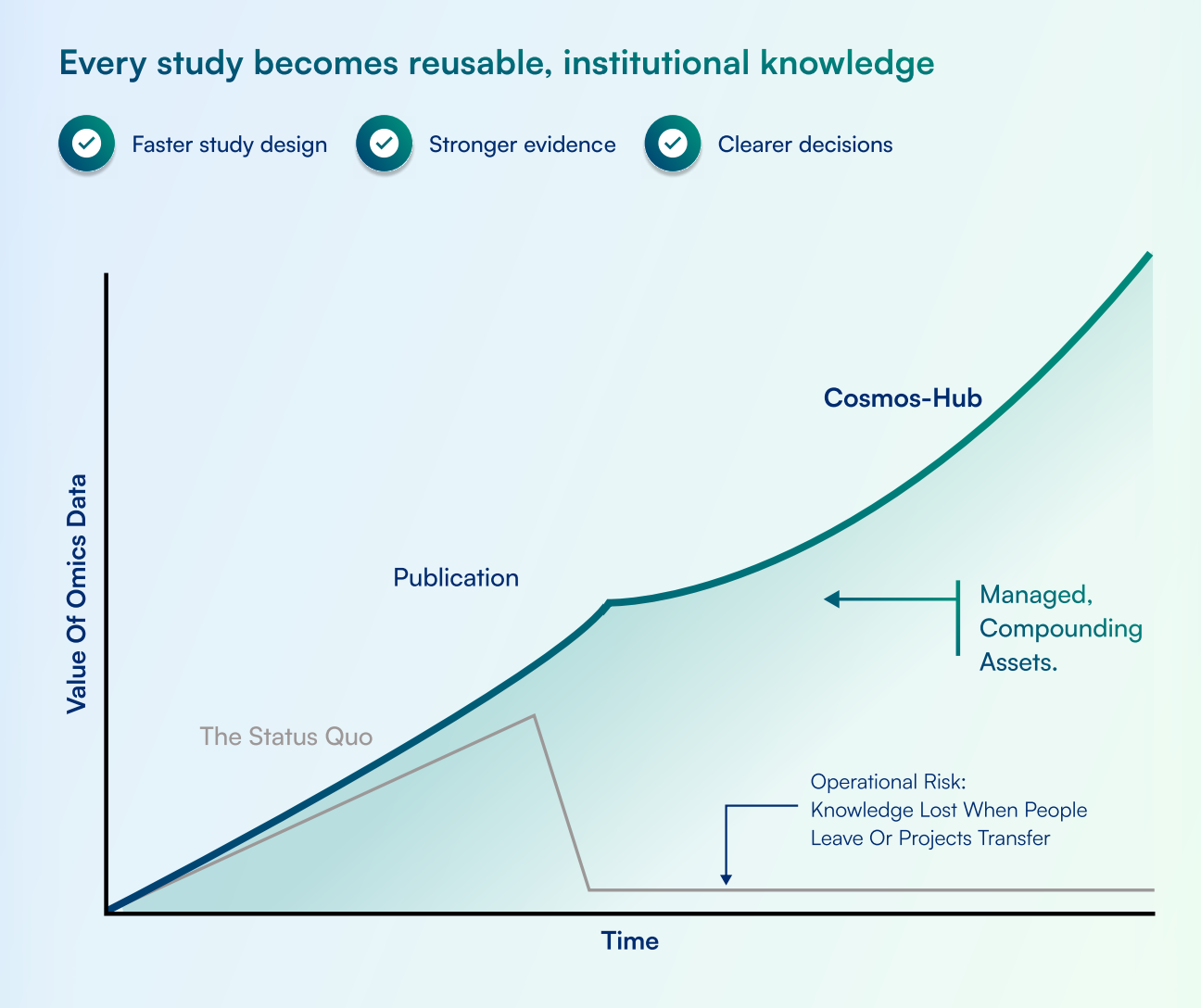
A multi-omics platform earns its cost when the second study runs faster than the first, because the first study's data, pipelines and decisions are still there to build on.
A complete multi-omics platform covers five capabilities: data onboarding and management, harmonization and quality control, statistical analysis, data integration, and knowledge governance. A platform that lacks any one of them pushes that work back onto spreadsheets, personal scripts or email. Use the table below as an evaluation scorecard: put the question in the third column to each vendor, and treat the red flag as a reason to look closer.
|
Capability |
What it does |
Ask the vendor |
Red flag |
|---|---|---|---|
|
1. Data onboarding and data management |
Accepts raw reads and processed feature tables for each omics layer, linked to sample metadata |
Which omics data types can we upload as raw data, and which only as processed tables? |
Each data type needs its own project, account or tool |
|
2. Harmonization and quality control |
Aligns sample IDs, metadata vocabulary and normalization across layers before analysis |
How do you reconcile sample identifiers and metadata labels across layers? |
Harmonization is a manual export step outside the platform |
|
3. Statistical analysis |
Runs validated statistics and visualizations with visible, adjustable parameters |
Can we see and change every parameter, and which method version ran? |
Results arrive without a method version or parameter record |
|
4. Data integration |
Combines layers through joint models or side-by-side analysis of the same samples |
Which integration strategies are built in, such as side-by-side comparison or joint models like MOFA, and do they run on matched samples across every layer? |
Integration means exporting each layer to R and combining them by hand |
|
5. Knowledge and governance |
Version-controls studies, pipelines and shared analysis frameworks so every team can reuse them, with permissions and a full audit trail |
Are our pipelines and analysis frameworks version-controlled and reusable across teams, and what happens to them when their owner leaves? |
Pipelines live in personal scripts with no version history, and sharing works by downloading files with no audit trail or SSO |
Most tools on the market are strongest in one or two of these capabilities. Cloud infrastructure tends to lead on data management and security, open-source method libraries on integration, and no-code analysis apps on statistics through an intuitive interface. The fifth capability, knowledge governance, is the one most often left to the customer, and it is the one that decides whether multi-omics research compounds over time or restarts with every project.
Multi-omics data integration combines measurements from different omics layers so that patterns shared across layers become visible, and published reviews group the methods into five strategies: early, mixed, intermediate, late and hierarchical integration (Picard et al., Computational and Structural Biotechnology Journal, 2021). The strategy you choose depends on your experimental design, your sample size and the question you need answered.
Matched multi-omics data comes from the same set of biological samples measured on every layer, while unmatched data comes from different samples or cohorts. Joint models such as MOFA need samples shared across layers to link them, so the experimental design decides which integration methods are open to you before any data is generated. Plan which samples go to which assay at the design stage, and record a single sample ID that every layer uses.
Bioinformaticians most often integrate multi-omics data with established open-source methods such as MOFA, mixOmics, iClusterPlus and similarity network fusion. MOFA identifies hidden factors that explain variation across multiple data types (Argelaguet et al., Molecular Systems Biology, 2018). mixOmics is an R package of multivariate methods for feature selection and multiple data integration, widely used for classification and biomarker discovery (Rohart et al., PLOS Computational Biology, 2017). iClusterPlus groups samples into disease subtypes from integrated genomic data.
A platform's job is not to replace these methods. Its job is to feed them clean, harmonized, matched input data and to keep their outputs versioned and reusable. In practice the most workable split is simple: scientists run standard per-layer statistics and side-by-side comparisons themselves, and bioinformaticians build joint integration models once and deploy them as version-controlled frameworks the whole team can rerun.
Multi-omics data analysis is used for four main R&D goals: biomarker prediction, patient stratification, drug discovery and explaining disease mechanisms. Each goal depends on reading omics profiles across multiple levels of biology rather than one.
Omics data platforms fall into four types: cloud research environments, code-based methods and workflow tools, no-code analysis apps, and centralized omics operating systems. We grouped them by what each is built to do, using vendors' own product descriptions and published reviews of integration methods. The type matters more than the brand, because it decides which of the five capabilities your team will still have to build or check.
|
Platform type |
Examples |
Strongest capability |
Check before choosing |
Best fit |
|---|---|---|---|---|
|
Cloud research environment or data platform |
DNAnexus, Databricks, AWS with internal pipelines |
Data management, scale and secure collaboration |
Who builds analysis interfaces for non-coders, and how studies are captured for reuse |
Large genomic and clinical data programs with in-house engineering |
|
Code-based methods and workflow tools |
MOFA, mixOmics, QIIME 2, Galaxy, RStudio |
Integration methods and flexibility |
Who maintains scripts, permissions and metadata standards |
Bioinformatics teams developing new methods |
|
No-code analysis app |
Omics Playground, One Codex |
Fast exploration for scientists |
Which data types are covered, and how studies are shared and governed across teams |
Teams exploring one main data type |
|
Centralized omics operating system |
Cosmos-Hub 2.0 |
Knowledge governance plus no-code statistics |
Whether your main data types are supported |
R&D organizations running microbiome and multi-omics studies across several teams |
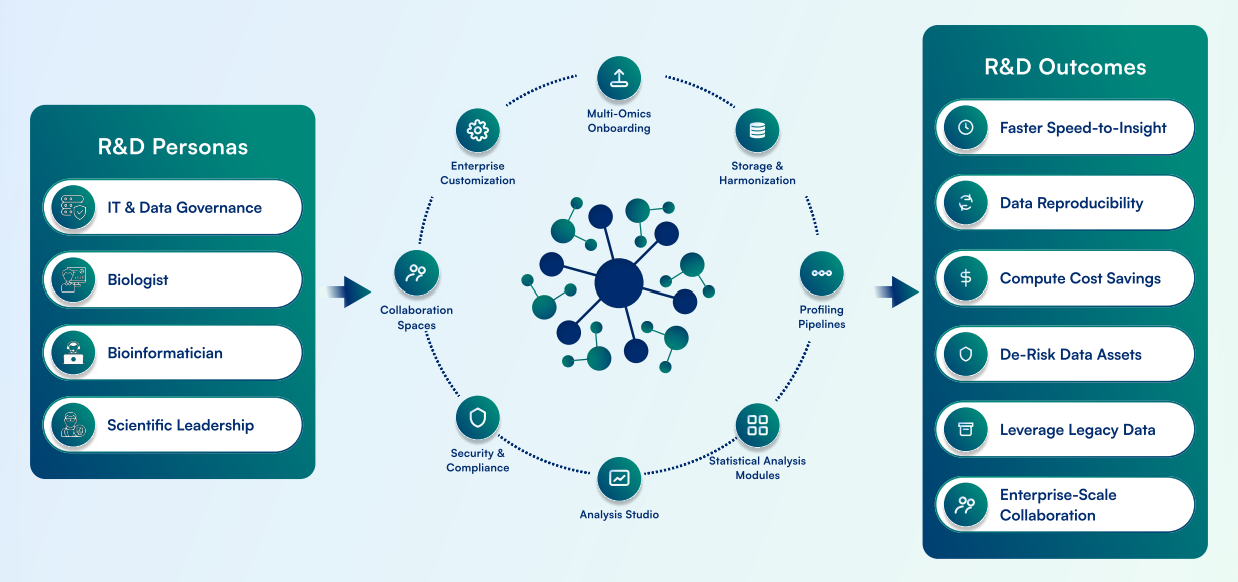
Cosmos-Hub 2.0 is Cmbio’s centralized omics operating system: a cloud multi-omics platform built to turn every omics study into a reusable scientific asset, with analyses that scientists can run without writing code. It expands the original Cosmos-Hub microbiome profiling platform to cover the full data-to-decision workflow. Mapped against the five capabilities in the scorecard above, the platform provides the following.
Cosmos-Hub has 1,000+ users in 30+ countries, who have profiled 600,000+ samples and run 170,000+ analyses on the platform. Nezar Al-Hebshi, PhD, at Temple University, puts the practical gain simply: the ease of data handling and the range of tools, including LEfSe and MaAsLin3, cut the time he needs to run analyses on his own.
Cosmos-Hub 2.0 is built for microbiome-centered multi-omics. Teams whose main data is human germline genomics, single cell multi-omics or spatial transcriptomics should confirm their data types are covered before shortlisting it, as they should with any platform.
List the omics data types your teams generated in the last 12 months and who analyzed each one. Then score your current setup against the five capabilities in the scorecard. Any capability that lives in a spreadsheet, a personal script or one person's memory is where your next multi-omics study will lose time. To see how Cosmos-Hub 2.0 covers each capability on your own data, book a demo.
The four main omics are genomics, transcriptomics, proteomics and metabolomics, which measure DNA, RNA, proteins and metabolites respectively. Many multi-omics platforms also handle epigenomics and microbiome layers such as metagenomics and metatranscriptomics.
A multi-omics platform is not the same as a LIMS. A laboratory information management system tracks samples and lab workflows, while a multi-omics platform analyzes the biological data those samples produce. The two connect through shared sample IDs and metadata.
Bioinformaticians are still needed with a multi-omics platform, for experimental design, quality review, new methods and joint integration models. The platform takes routine reruns and figure requests off their desks, so their time goes to the work only they can do.
The best multi-omics platform is the one that supports your omics data types and covers all five capabilities in the scorecard above for the people who will use it. Test any shortlisted platform on your own data, not a vendor demo dataset.
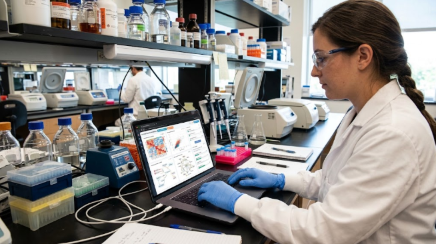
Which omics analyses a bench scientist can run without code, a five-point pre-flight checklist, and when to bring in a bioinformatician.
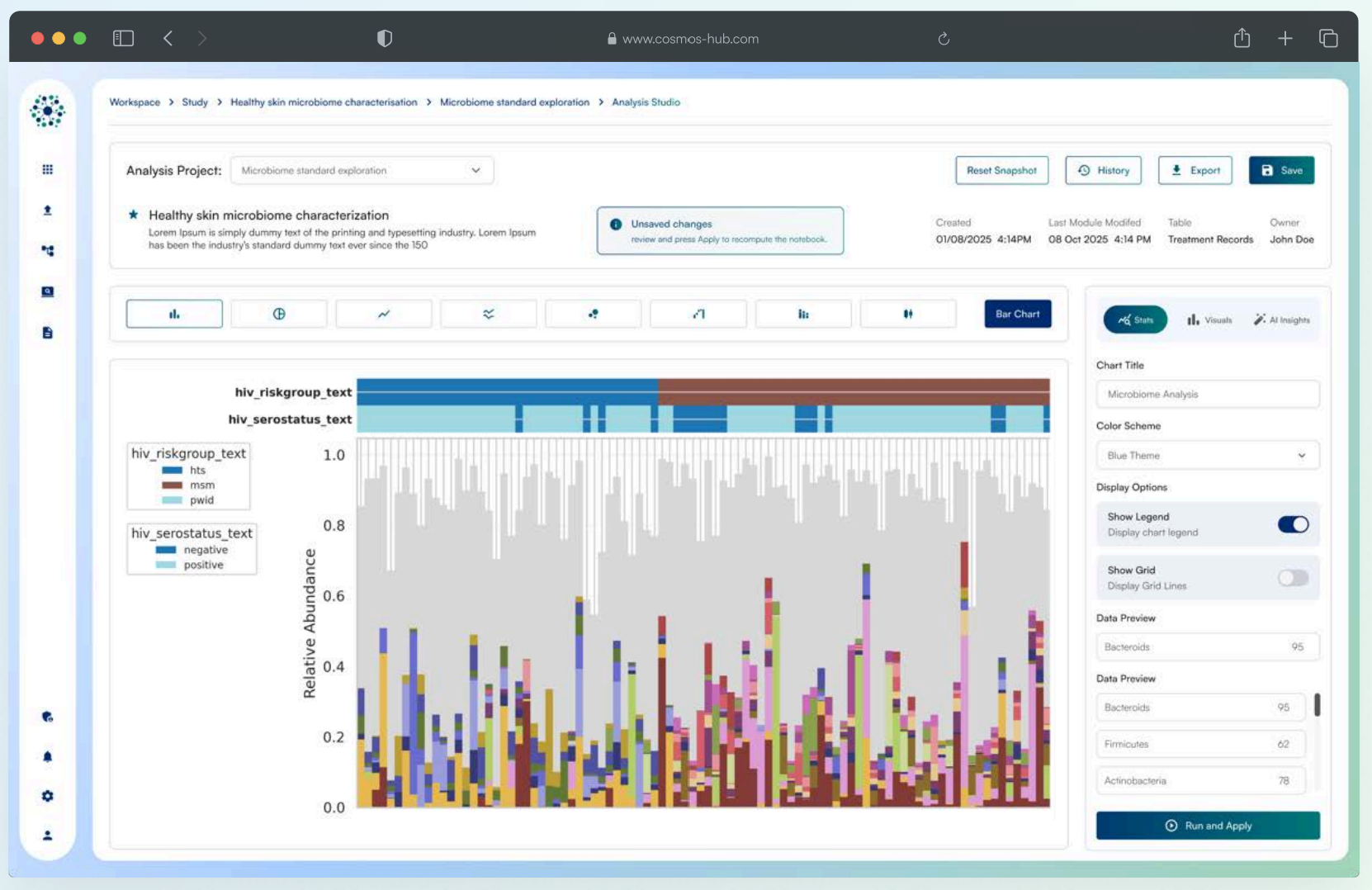
 Manoj Dadlani : Sep 9, 2026, 9:10:37 AM
Introducing Cosmos-Hub 2.0: centralized omics operating system for multi-omics research, offering 40+ tools and enterprise collaboration
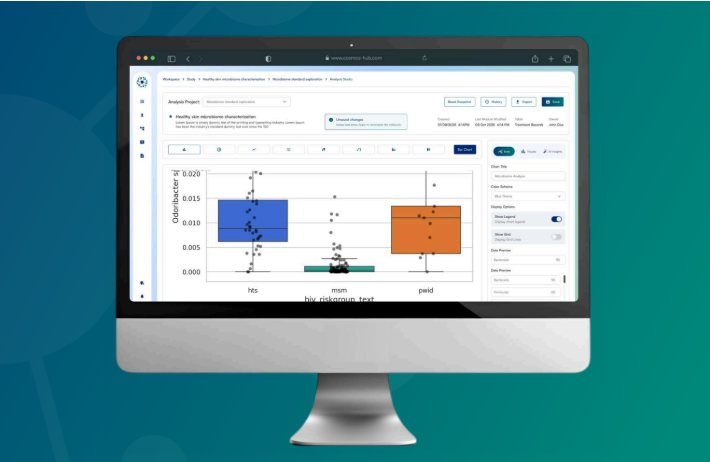
Cosmos-Hub 2.0: Enterprise-grade omics collaboration tools. Improve R&D productivity with governed data and shared workspaces.