The Defining Genome Sequencing Benefits
Get an overview of the top benefits of genome sequencing, including disease diagnosis and prevention, targeted treatments, and more.
5 min read
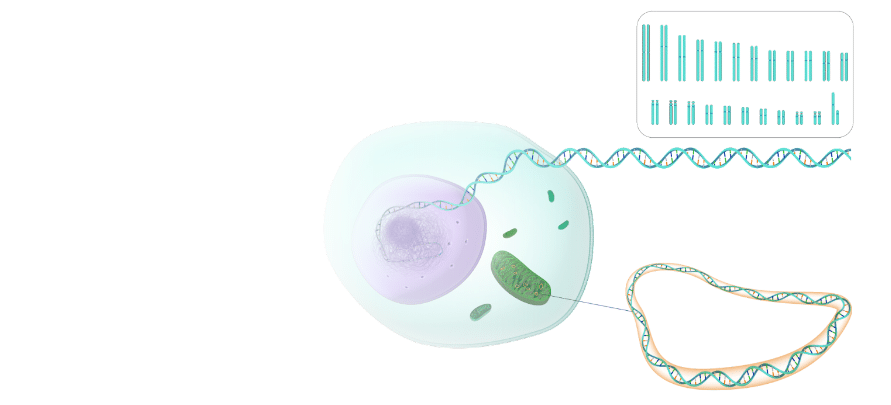
All organisms diverge in their size, appearance, physiology, and nutrient requirements. Instructions for an organism to live, reproduce and diverge from other organisms lay in its genome.
The genome is the complete, unique set of genetic material that an organism has. A recent study tells us that even the human genome of identical twins differs by 5.2 mutations on average.
In any environment on the Earth, there are millions and billions of unique individual organisms, with each organism having unique microbial genomes.
On the other hand, the word metagenome describes all the genomes in a sample from any environment.
To summarize, a genome is an individual organism’s genetic makeup and a metagenome is a collection of genomes from many individuals within an environment and/or sample.
In this guide, we will discuss what genomes and metagenomes are, before diving into the difference between genomics and metagenomics. We will also look at some advantages of metagenomic sequencing over traditional single genome sequencing, and offer some useful insights along the way.
Microbial genomics is the study of individual microbial genomes. This field combines advanced molecular sequencing techniques with bioinformatics, to sequence and analyze microbial genomes. Using this technology, scientists can gain insights into an organism’s metabolic pathways, gene regulation networks, and evolutionary history.
The goal of this research is to understand the abilities of different microbes and use this knowledge to identify new applications and potential new treatments for diseases. Other common applications of genomics include:
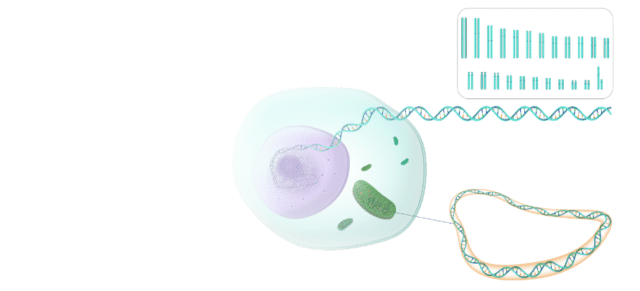
Source: National Human Genome Research Institute
The genome of an organism is a set of instructions that determine its traits and functions. Genomic studies and data analysis allow researchers to understand how individual organisms function, interact within microbial communities, and adapt to their environments by shotgun sequencing the genome and then analyzing it for a variety of traits.
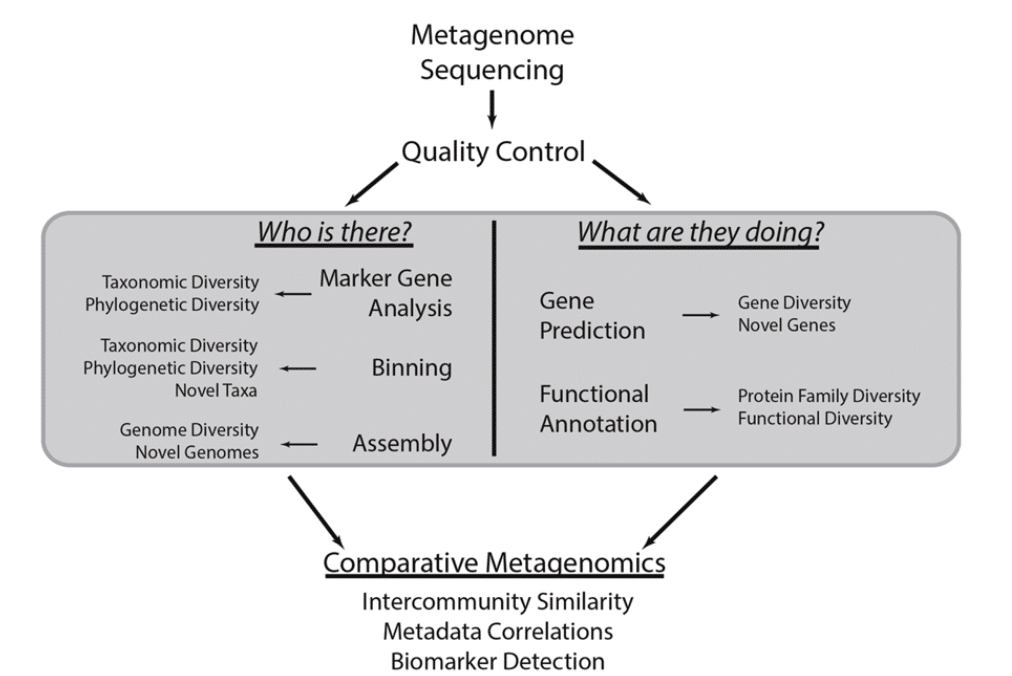
Metagenomics, on the other hand, is the study of the metagenome, the complete set of genomes in a sample. The term metagenomics usually refers to the genomes of bacteria in a sample but can also include other microorganisms such as viruses and fungi.
There are currently two major high throughput sequencing technologies used to do this; 16S rRNA gene sequencing and whole genome shotgun sequencing (WGS).
16S rRNA gene sequencing was invented by Carl Woese and George Fox and led to the ability to accurately identify the bacteria composing the metagenome of a sample. 16S rRNA gene sequencing depends on amplification of the 16S rRNA gene, which all bacteria have and contains conserved and hypervariable regions.
Primer sets are designed to anneal to the conserved regions and amplify the variable regions. In this way, the 16S rRNA gene is amplified from all bacteria and the variable region can be used to identify which specific bacteria is present.
WGS however, does not rely on amplification of a specific gene and instead sequences all genetic material present in a sample. Therefore, this method is not specific to bacteria and will amplify viruses, fungi, protists, and host DNA. Because it does not rely on amplification or specific primer sets, this method is less biased than 16S sequencing.
It also allows accurate identification of the organisms down to the species and strain levels along with prediction of their functional capacity based on genes present in the sample.
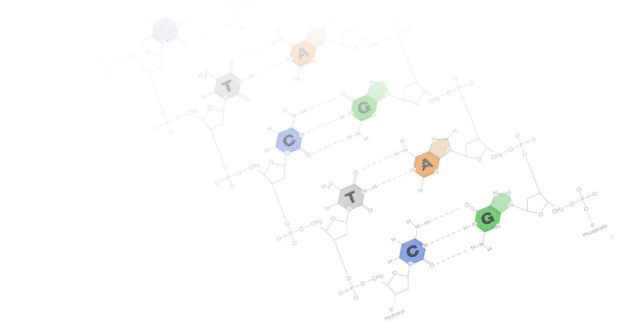
Source: National Human Genome Research Institute
The metagenome is the complete set of genomes in a sample. These complete genomes provide comparative analyses opportunities for assessing the species diversity in a sample, as well as an understanding of the metabolic pathways and gene regulation networks present.
Metagenomics can also be used to understand the evolutionary history of different microbial communities and their adaptation to changing environmental conditions.
In addition, the importance of metagenomics is highlighted by the use of metagenomics for drug discovery by identifying microbes with novel biochemical pathways that can be utilized to discover new drugs or treat diseases.
A metagenome assembled genome, or MAG, is a genome that was constructed from a metagenomic sample. In other words, from a sample containing many genomes, the genomes of individuals are pieced together. MAGs are often useful to shed light on non-culturable, novel, unannotated microbes in metagenomic data.
The main difference between genomics and metagenomics is the number of organisms evaluated in an assay or sample. Genomics studies the genome of a single organism while metagenomics studies the collection of different organisms’ genomes within a sample.
In other words, a genome works as an individual organism's genetic makeup, while a metagenome is a collection of genomes from many individuals within an environment and/or sample.
Further differences between metagenomics and genomics include:
Let’s take a closer look at these differences.
Due to the complexity of metagenomes, greater sequencing data is required to obtain proper coverage of the multiple genomes within the sample. As a result, metagenomes require greater sequencing depth (with the depth dependent on sample type, number of variable genomes, target interests of the research) than sequencing a sample with a single/clonal genome.
Use keywords: Environmental samples, human gut microbiome, diverse microbial communities.
Metagenomic samples can derive from essentially anywhere multiple genomes are found. This can include environmental samples such as soil or water, human gut microbiome samples, saliva samples, etc. This is a complex sample, as compared to samples for genomics, which typically originates from a single cell culture growth material.
Since metagenomics typically requires much more sequencing depth than genomic sequencing, metagenomics sequencing typically has a higher price tag than genomics sequencing. However, depending on the kind of sequencing needed for genomics sequencing (short reads vs long reads), genomics cost can increase as well.
| Comparison Factor | Metagenomics | Genomics |
| Number of organisms collected in sample | Many | One |
| Depth of sequencing | 3M to 100M+ Reads Per Sample | 3-6M Reads Per Sample (Bacterial Genome) |
| Common sample types/applications | Stool, Saliva, Skin Swab, Soil, Wastewater | Cell Culture |
| Cost of sequencing | Higher | Lower |
On a broad scale, metagenomic data is produced from the sequencing of many individuals’ genomes simultaneously, whereas traditional functional metagenomics data is produced by sequencing one individual’s genome at a time.
Practically, this means that communities of bacteria, whether from the environment or living on other organisms, can be sequenced and identified.
This is important in elucidating their roles in disease and environmental functions. It can also reveal interactions between organisms living within a microbial community as well as the impact of the environment on the community of organisms. Studying these factors is not possible when examining a single genome.
Metagenome sequencing offers many advantages over single genome sequencing. These include:
Metagenomic sequencing is a recent, cutting edge technology that allows studying all genomes present in a sample. It can identify the microbial composition in a fermented drink or the microbial metabolic functions present in the human gut during disease.
Name an environment and metagenomics would capture all genomes present in its sample, even the genomes of organisms which are yet to be discovered by science.
Metagenomic sequencing has the potential to produce novel data that help us understand microorganisms on a community level, leading to new discoveries that may enhance everything from healthcare to agriculture to climate science and beyond.
Unlock the power of the microbiome with Cosmos-Hub…
At Cosmos-Hub, we provide industry-leading, state-of-the-art metagenomic sequencing and analysis services. We provide both targeted sequencing, where species or genes are of interest, and non-targeted sequencing, which can identify both known and novel organisms in a sample.
Our bioinformatics pipeline contains comprehensive databases to ensure accurate identification of microorganisms from any environment. We also provide custom analysis with expert support from our team of knowledgeable scientists.
Let us help you unlock the power of the microbiome. Get a free quote or speak to one of our experts today.
Metagenome refers to the entirety of unique genomes present within a sample/environment.
The metagenome refers to the genomes of all organisms within a sample. While the entire microbiome of a sample can be found within the metagenome, other genomes could be present within the sample as well (such as the host genome) which is not considered part of the microbiome.
Get an overview of the top benefits of genome sequencing, including disease diagnosis and prevention, targeted treatments, and more.
What is the difference between 16S and metagenomic sequencing? Discover all you need to know in our expert guide.

Discover essential insights on the relationship between cancer and the gut microbiome from our expert-led comprehensive guide.